
A SCULPTOR'S NOTEBOOK
Free preview lesson: 5.4 Blocking Ears
BLOCKING EARS
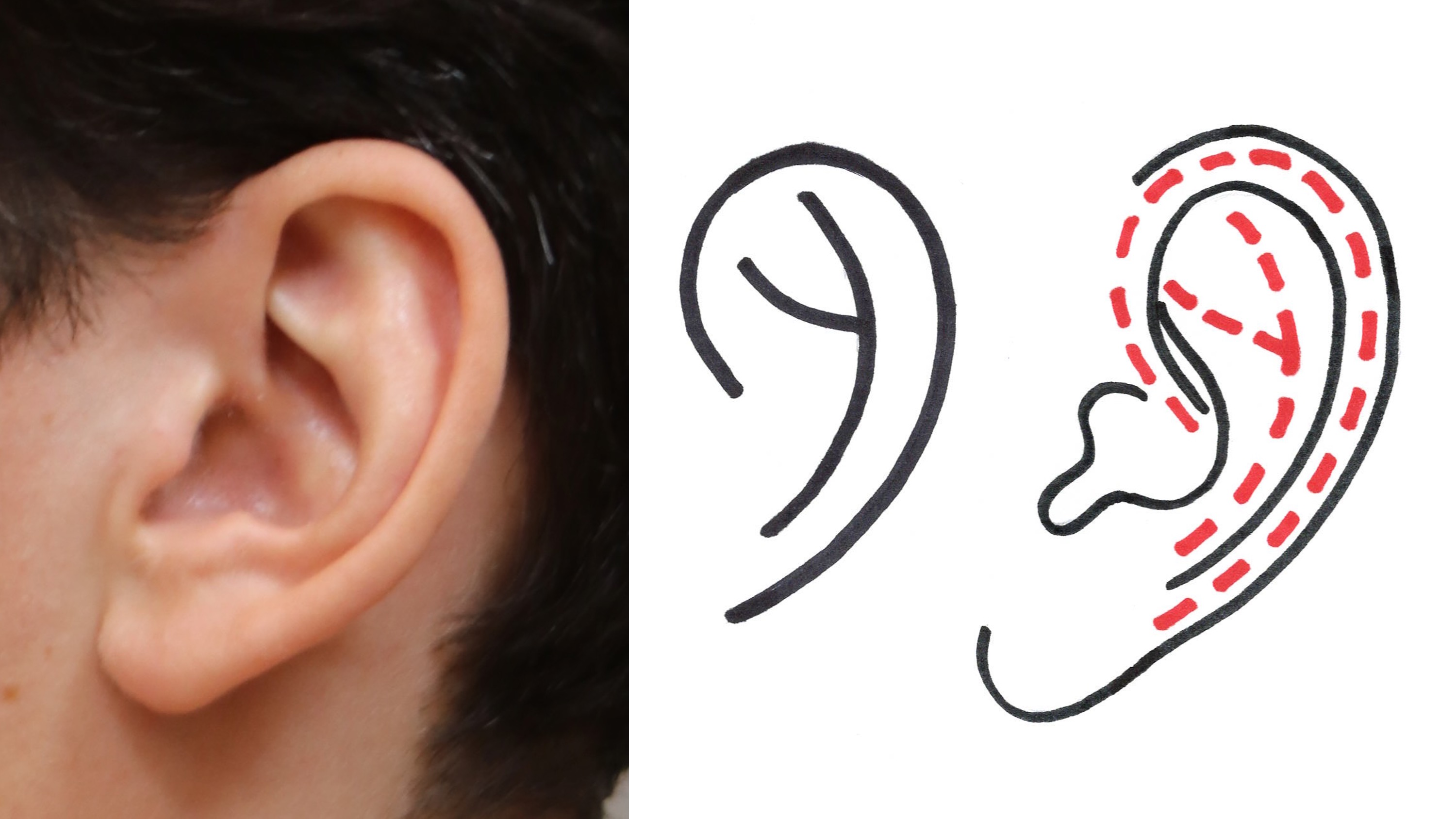
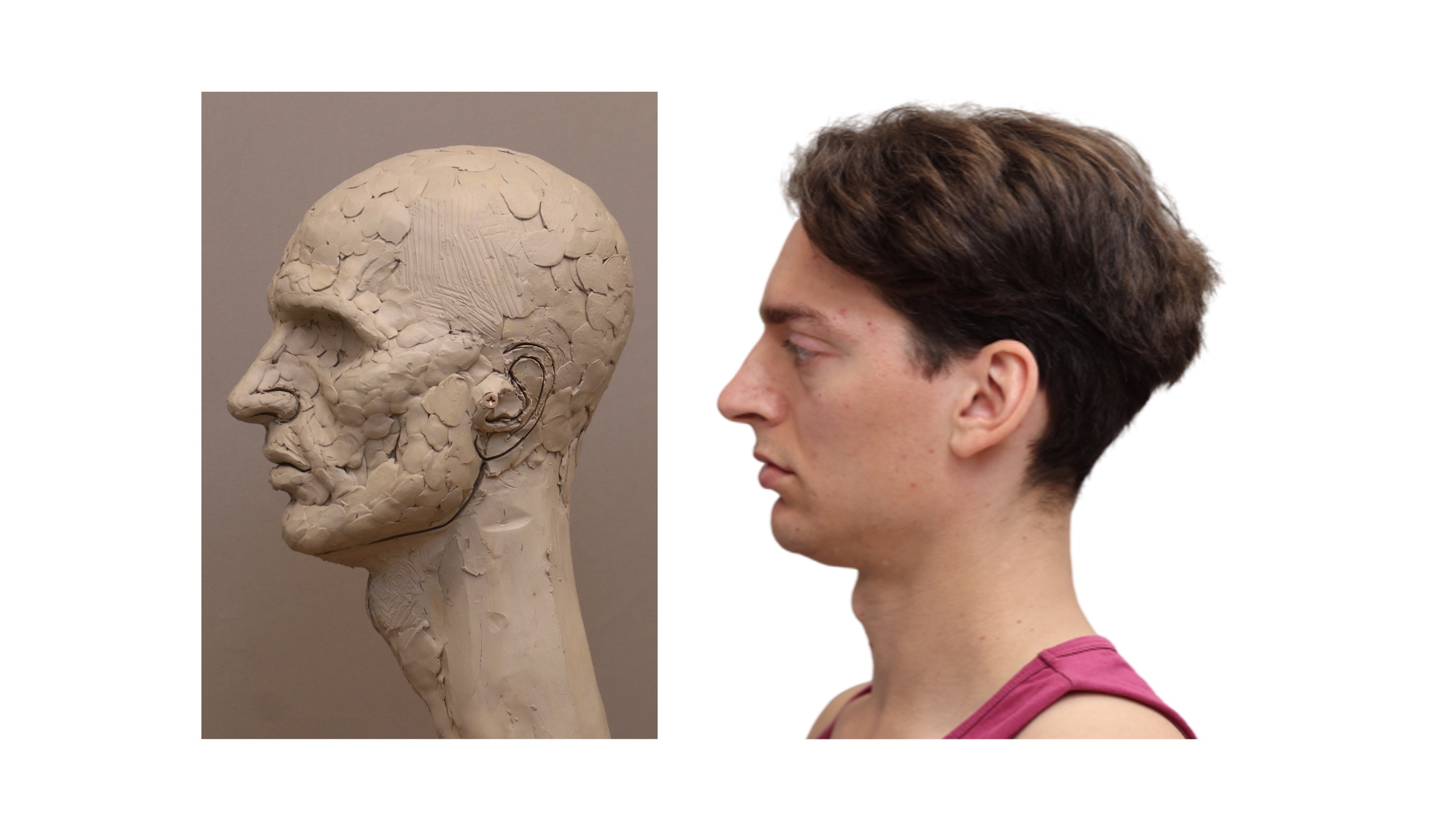
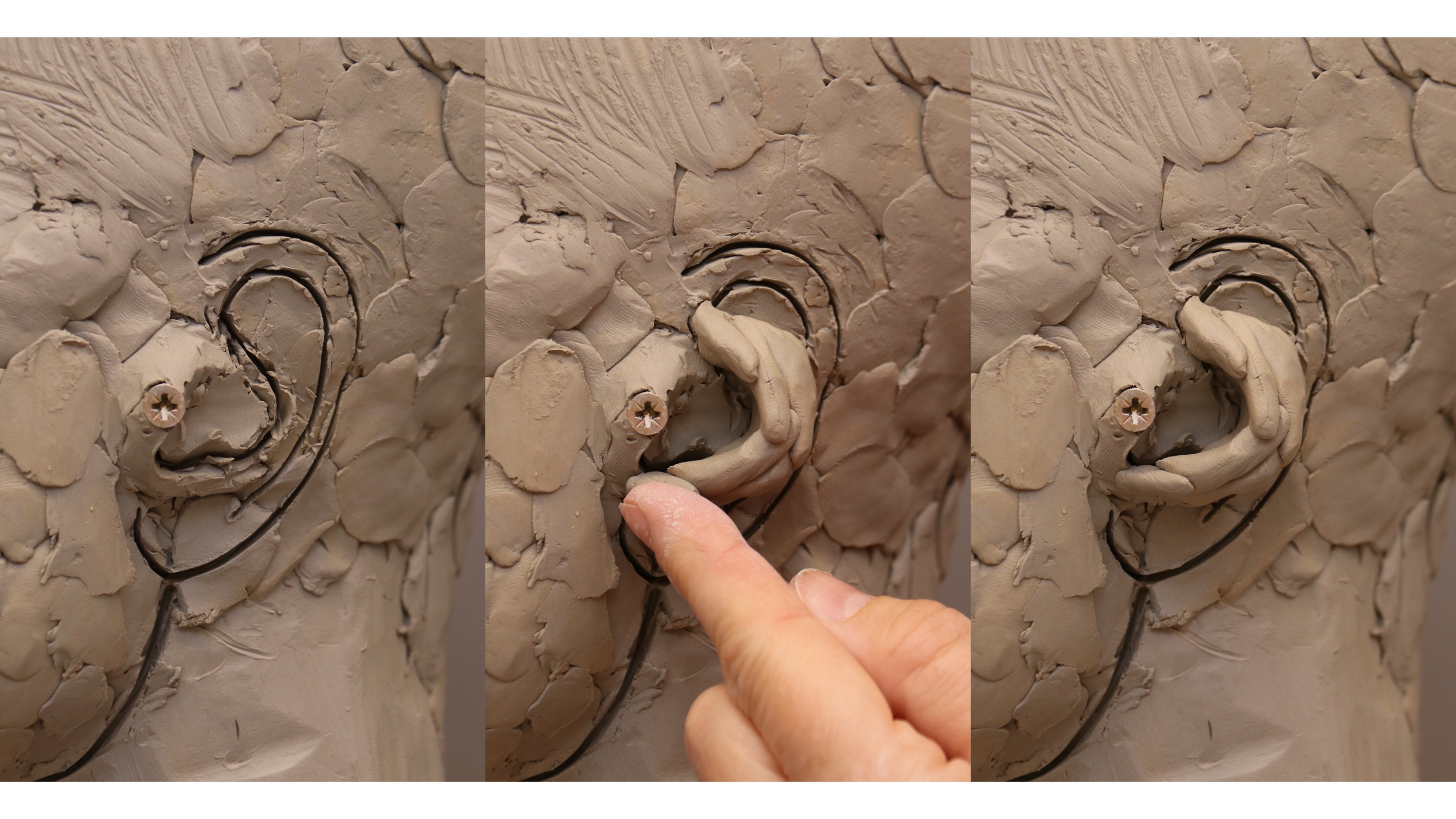
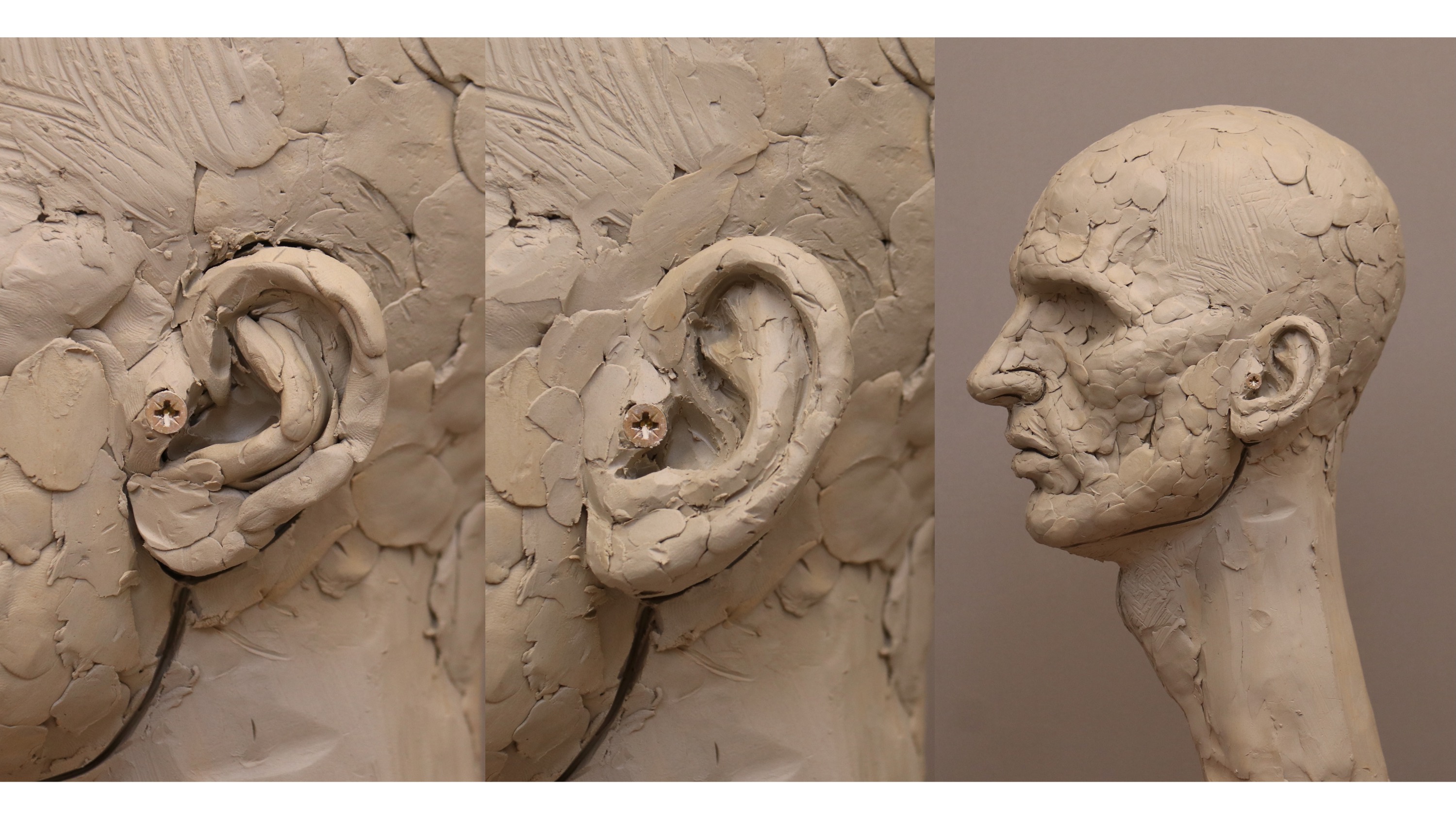
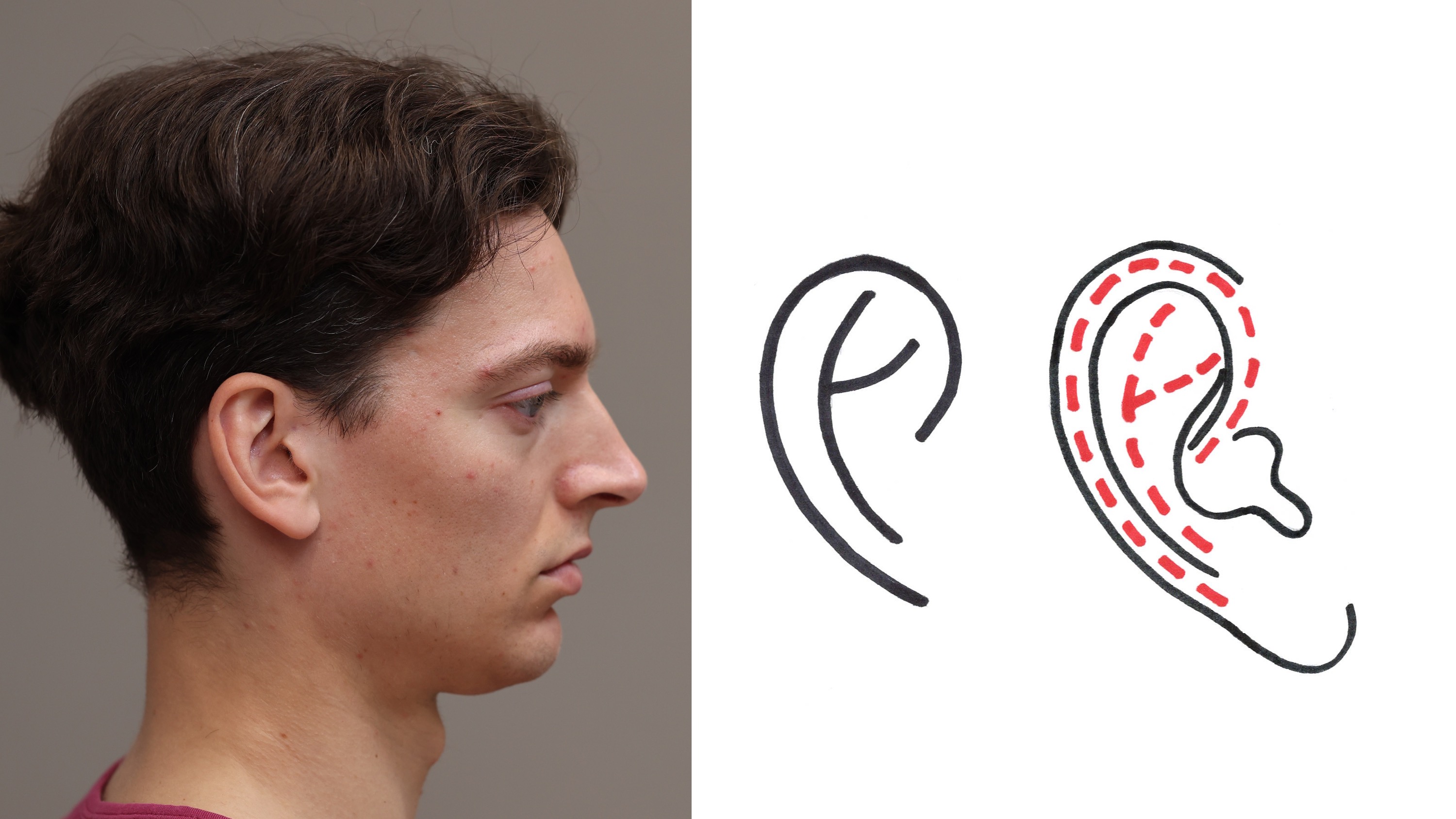
To block in the ears, I begin by drawing the outline of the shape in relation to the tragus point. When you look at an ear, think about how the outer main shape we see sits on top of an inner cuff that sits behind the ear, pushing it forward at an angle so we can hear things in front of us.
I usually draw the outline of the ear in relation to the tragus point. Then I create that cuff and build out the outer shape of the ear so it forms a lip in front of the skull. A useful way of remembering the shapes of the ear is to think of the outer ridge as a big 9 shape, with a smaller y within it. (This only actually works literally on the model’s left ear, and the right side is the mirror image, obviously.)
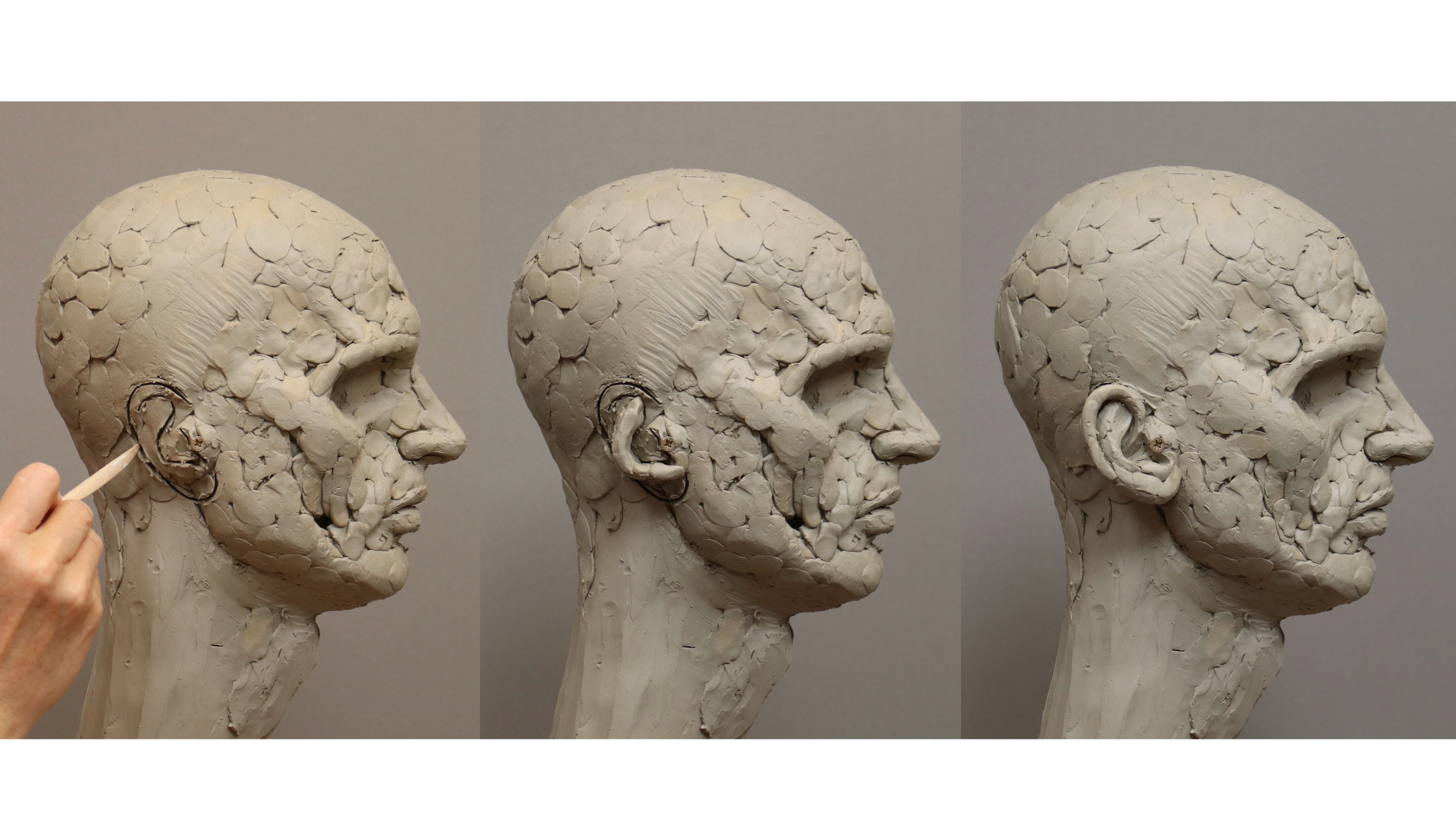 When you have blocked out both sides, check the Maximum Ear Width from the front. The widest point across the ears is often towards the top of the ear. However, sometimes - and in the case of Carlos our model - the widest point is lower down towards the bottom of his ears.
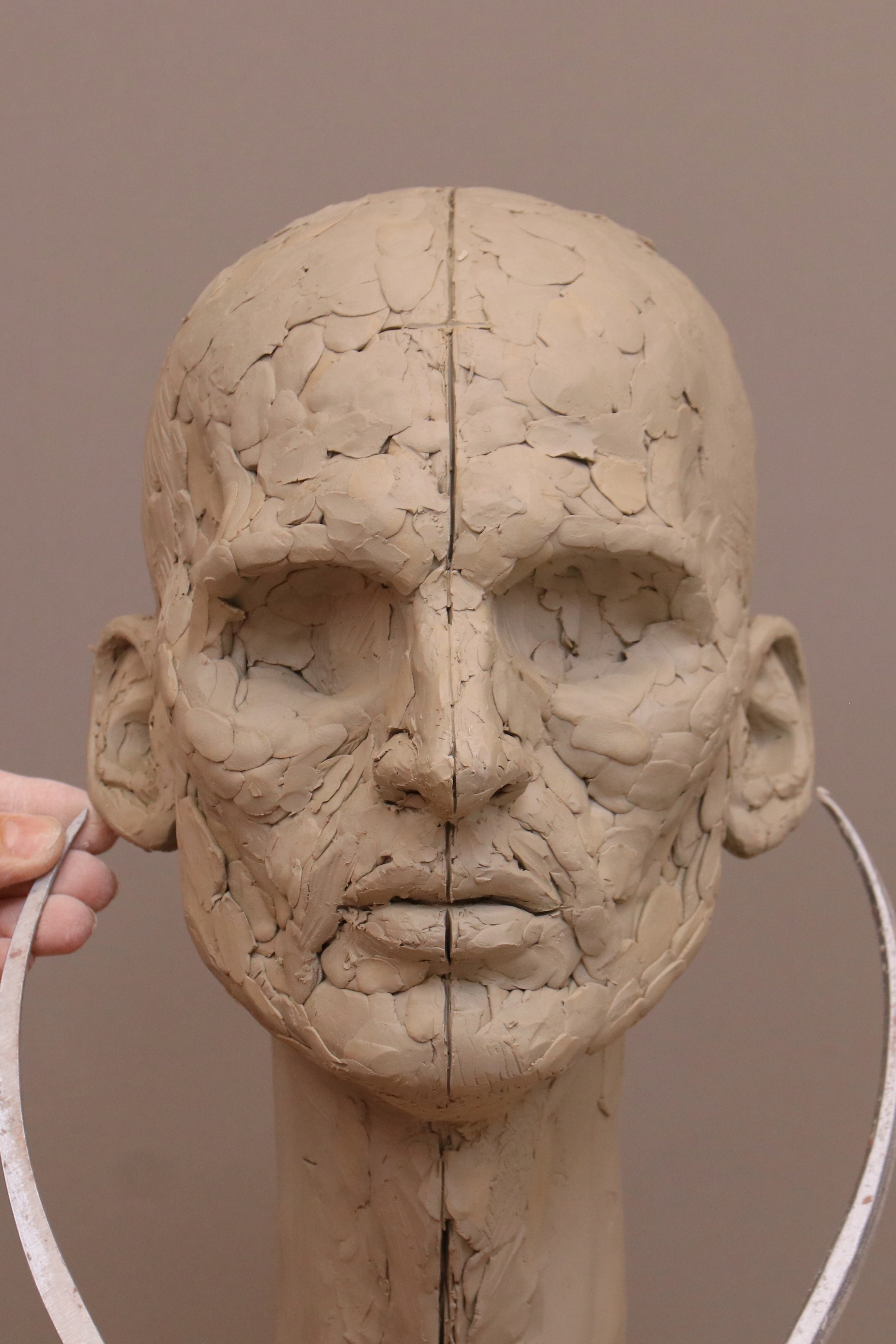 Maximum Ear Width Measurement
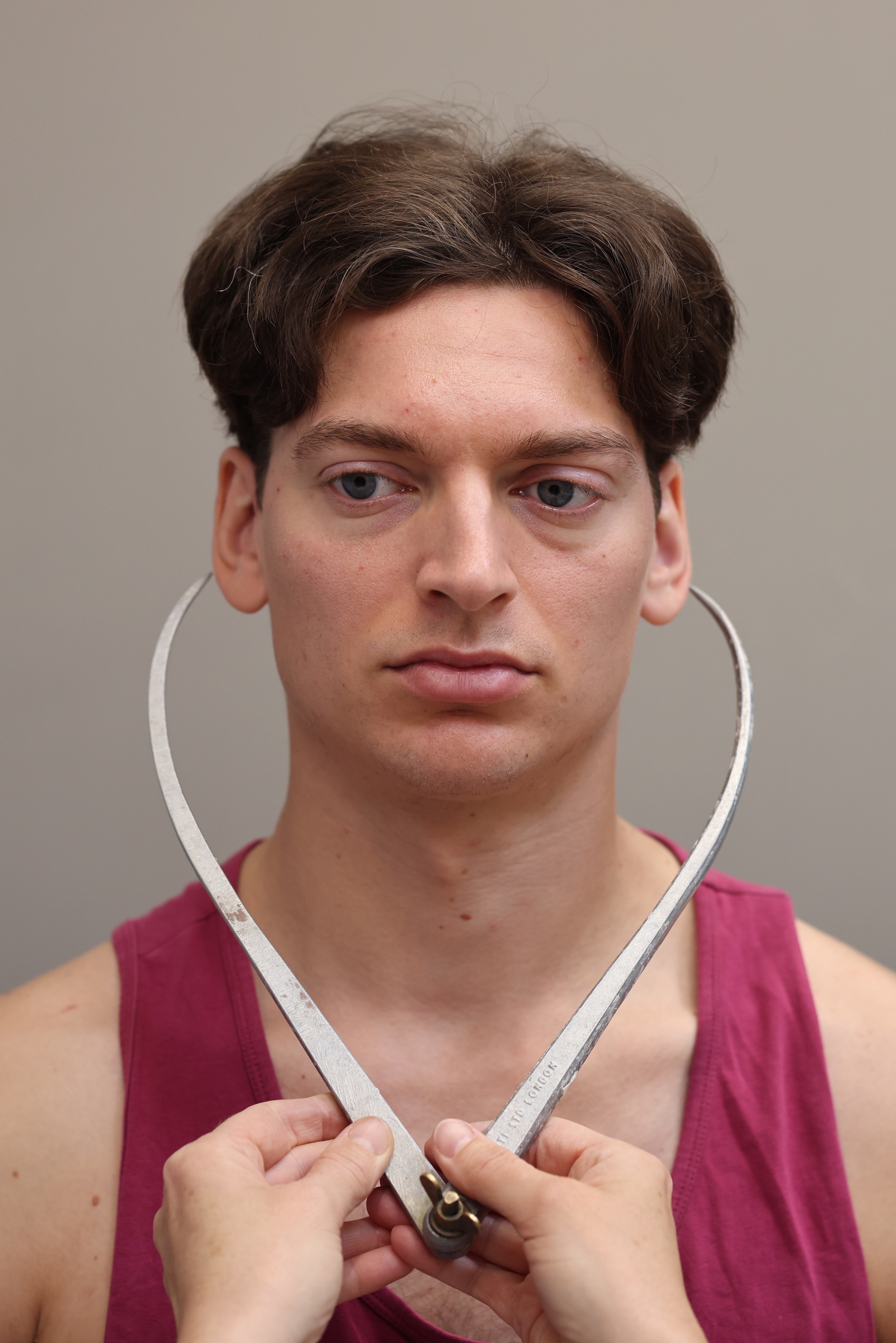 Maximum Ear Width Measurement
It is also useful to check the Widest Skull measurement at this point. Look at the overall silhouette of the shape of the skull in relation to the outline of the ears.
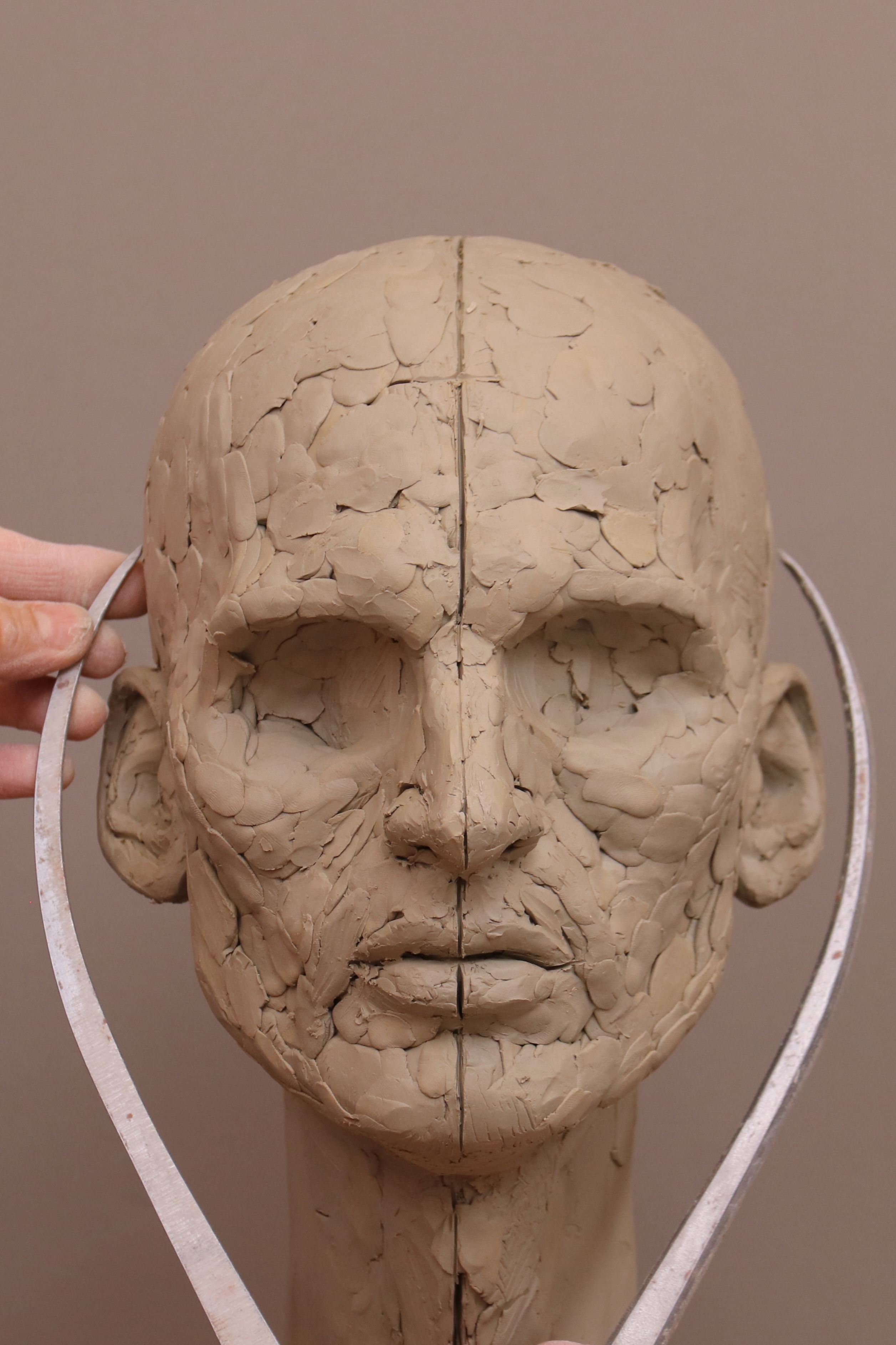 Widest Skull Measurement
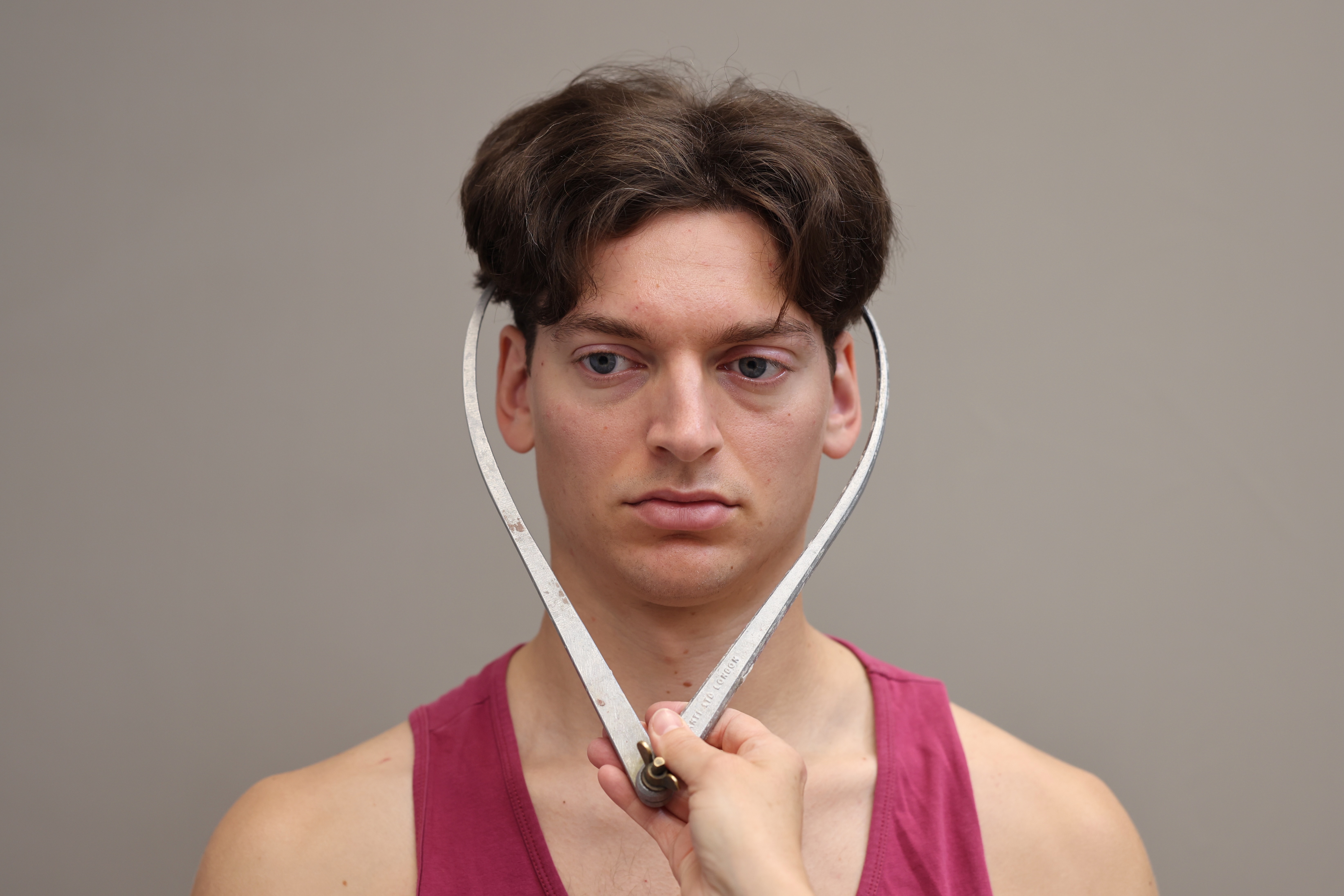 Widest Skull Measurement
Comprehensive visual course (photographs and text) and a full set of reference.
Step-by-step instructions to support you in developing your art. From building up the skull structure to final finishing.
A full set of reference photographs and measurements, so you can sculpt the featured model, Carlos.